
Breaking Free from Legacy Oracle into AWS, part four: Why companies still run Oracle - and why the good reasons are shrinking - Yavor Ivanov

A few weeks ago, OpenAI published an interesting engineering post titled "Scaling PostgreSQL to power 800 million ChatGPT users" by Bohan Zhang. It is about a relational database sitting in the heart of their data management layer. This article resonated with me on many levels as a long-time DBA. What I see there is a team committed to finding, testing, and implementing solutions to some of the most common data problems. And while the solutions are well-known and can be implemented at any company, the scale of OpenAI's products is beyond most of the enterprises. Which is proof that scale does not demand commercial database engines - it only requires good architecture.
So, why do companies still run on Oracle? There are wrong answers, and then there are some right answers. Let’s dig into it
Good answers
Our application vendor does not support other data engines
This is a legitimate concern. If you are using something like Oracle e-Business Suite or Independent Software applications with a high degree of vendor lock-in, there are no easy solutions. This does not mean, however, that all your other systems can't be modernized.
Another aspect to consider is that more and more application vendors are supporting open-source data engines. We at Cintra work with many ISVs to modernize their stacks, multiplying the impact across entire industries. At the last AWS re:Invent, we showcased one of our successful projects in which we helped an ISV in the healthcare industry reduce their database spend by 90% by moving to Postgres, while achieving a 30% improvement in response time as a side effect.
Changing the database engine introduces risk
Based on my experience, this is true in most cases. Changing the front-end, moving to the cloud, adding new features - all this is easier than changing the data engine of a legacy application. And when complexity is not met with experience and good planning, this leads to risks and unknowns. This is exactly why we have built a team of database architects and engineers with decades of experience in running Oracle, SQL Server, and Postgres in the real enterprise world to help with such migrations. With next-generation purpose-built tools such as Modernize[IQ], we can help even with complex applications that contain a lot of business logic. Feel free to join our upcoming webinar at www.cintra.com/events if you want to learn more about this.
The business should also keep in mind that relying on legacy database engines and paying for enterprise licenses in large quantities is a risk in itself. I've seen customers paying eight-digit annual support bills. If we can free up even half of these legacy sunk dollars and redirect these budgets into a well-structured modernization project, we get exceptional financial, business, and technology results.

Our home-grown legacy application cannot be changed
Running legacy/unsupported applications is a significant business risk, and paying expensive database license is just one facet of this. It is acceptable only for applications on a sustaining trajectory with a clear path to retire them, even if long-term.
If you plan to use the application for years to come, this should either be flagged and accepted as a major business risk or addressed.
Wrong answers
Only Oracle can give us the performance we need
This misconception was born in the 1990s and 2000s, at the time of the client-server architectures, when Oracle Database was the most performant database engine, and open source was quite experimental.
Nowadays, modern data architectures use purpose-built data stores. Open-source and/or cloud-native data engines like Postgres (for relational), Valkey (for caching), Snowflake (for analytics), can outperform monolithic Oracle deployments for most specific workloads, at a fraction of the cost. The OpenAI article I quoted already proves this at enterprise scale - relational data, serving millions of queries per second, meeting strict scalability and availability demands in the real world.
Amazon also migrated out of Oracle - 75 petabytes across nearly 7,500 Oracle databases to AWS services, achieving 60% cost reduction, 40% latency improvement, and 70% reduction in DBA overhead. Over 100 teams participated, including Prime, Alexa, Kindle, and Twitch.
We are an enterprise, and we cannot rely on open-source
There are two answers here. First, if a company like Amazon can evolve away from commercial databases, are you sure your enterprise needs exceed theirs? GitHub, Spotify, Apple (for iCloud), and Instagram all run on PostgreSQL at massive scale. The Linux kernel itself, which powers virtually all enterprise infrastructure, is open-source. The "open source isn't enterprise-grade" argument has been dead for years.
And second, we are in 2026 - open source is reliable, performant, and compliant technology. There are many companies that provide 3rd-party support for all kinds of open-source tools, including databases.
Because Oracle Database is so versatile, it can meet all our data needs
This is another major legacy misconception. Indeed, Oracle can handle structured (relational), semi-structured (JSON/XML), and unstructured data (LOBs). I've worked successfully with Oracle databases as small as a few gigabytes, and as big as 1+ petabytes. I've deployed response-time-critical OLTP databases, as well as very large DSS systems with Oracle.
However, this versatility has a cost. Oracle is arguably one of the most feature-rich and mature relational database engines, but for all other use cases, it is "very good" - and equally expensive. Want to store scanned documents in the expensive Exadata storage - go for it. However, here at Cintra, our AWS database optimization assessment data has enabled us to identify that 9 Petabytes (out of 50 Petabytes of Oracle storage) can be optimized to use AWS S3 by moving LOB database to cloud object store, providing potential annual savings of at least $32.2 million, with minimal application changes and no security, availability, or performance penalties.
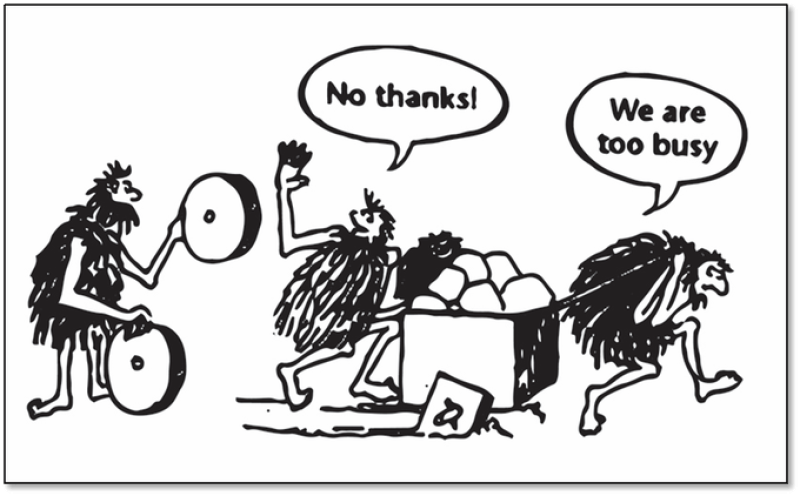
We are too busy delivering business features
Harvard Business School professor Clayton M. Christensen, one of the brightest minds in business over the last 50 years, has written many books and articles on what he calls "The Innovator's Dilemma". He showed how, in all business verticals, making "the right" decisions leads to many companies' utter failure. He classifies the "delivering features" cycle as a sustaining innovation - fast, good for a few cycles, but leading to sub-par outcomes in the long run.
At Cintra, we are helping many customers free up significant funds by restructuring their existing database landscape and feeding those dollars into innovation. Moving to targets like RDS for Oracle or OracleDatabase@AWS is a great tool for the short term, but you should always have long-term goals for improving where you stand on the data landscape.
With modern GenAI migration tools like Modernize[IQ], moving to Postgres, even for big, complex applications, can be delivered rapidly (there is an upcoming webinar on it; feel free to join here). Our experienced team can help you reduce the risk of such a migration and familiarize you with the new technology.
Amazon's own DBA team was retrained as migration specialists after the Oracle migration, showing that the "too busy" argument is actually an investment-in-people problem, not a time problem.
Oracle is the best RDBMS
This answer is mostly right. Oracle may not be the most popular RDBMS anymore, but it is still one of the most feature-rich and mature relational database engines. Also, First class is the best airline experience. If your company flies all employees First Class, please contact me - I may be willing to join your team.
The real question is not whether Oracle is powerful — it is. The question is whether you need that power for every workload, and whether the premium you pay for it is justified by the value it returns. In practice, many Oracle deployments we encounter are dramatically overengineered for their actual workload. A database that processes a few thousand transactions per minute does not need Exadata. A reporting system that runs nightly batch jobs does not need Real Application Clusters. Yet these customers are paying Enterprise Edition licensing for workloads that would run efficiently on open-source.
What often gets overlooked is the opportunity cost. Every dollar spent on Oracle licensing for a workload that doesn't need it, is a dollar not spent on innovation, talent, or infrastructure that moves the business forward.

Let's get rid of Oracle completely, and now!
Yes, this is another wrong answer. Changing the data platform is a complex project that introduces a risk and, honestly, takes time. Products like Modernize[IQ] do help, but planning and careful execution still take time.
This is why Cintra takes a phased approach. Moving your workloads to RDS or OracleDatabase@AWS is a great first step, which helps the business de-risk the initial migration. Then we can identify suitable migration targets for the first wave (the low-hanging fruit) and migrate those within a few weeks or a few months. This gives the customer team experience with modern open-source and/or cloud-native data stores, which is crucial later when we tackle the more complex systems. Our process is proven and delivers results in the real world.
The Bottom Line: Comfort or Innovation?
The question is no longer whether you should move away from Oracle — it’s how and when and to what degree. OpenAI’s PostgreSQL deployment proves that open-source can handle the most demanding workloads on the planet. Amazon’s own migration proved it’s achievable even at massive enterprise scale. And with modern tools and specialized partners like Cintra, the risk of modernization is far lower than the risk of standing still.
Modern data platforms on AWS also unlock access to the latest AI innovation capabilities. For example, the latest Anthropic Claude Opus 4.6 — currently the most capable AI model for enterprise agentic workflows and coding — is available as a fully managed foundation model in Amazon Bedrock, with enterprise-grade security, data residency, and governance built in. When your data already lives in AWS, integrating it with frontier AI models becomes a natural next step rather than a separate infrastructure project. That is a strategic advantage that legacy, on-premises Oracle deployments simply cannot match.
Organizations working with Cintra are acting now to free up millions in legacy licensing and support costs and reinvesting those budgets into innovation. The ones that wait are paying a growing premium for the comfort of the familiar. So, choose your path – comfort or innovation?
If you're ready to start the conversation, or even just curious about what your Oracle landscape looks like from a modernization perspective, feel free to reach out. We've delivered over 400 optimization and modernization assessments and delivered this outcome many times with real-world applications, and we'd be happy to share what we've learned.